
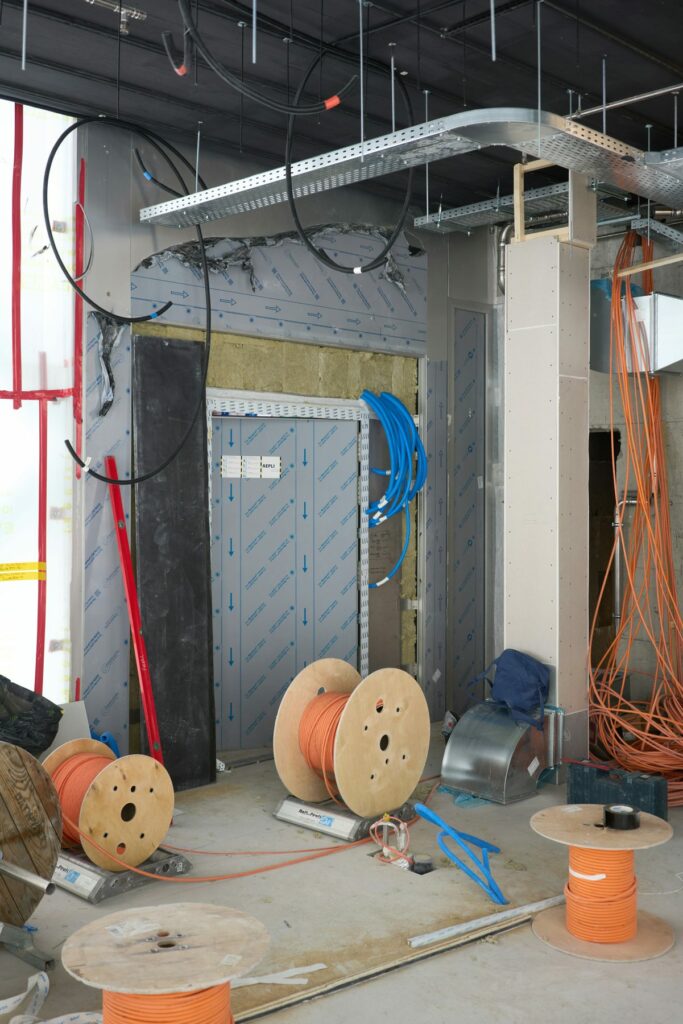
Planning around high cable density, pathways and future system changes in mission-critical environments.
Why This Topic Matters
Firestop Considerations for Data Centers belongs in a practical firestop knowledge base because field conditions rarely fit into one generic rule. Project teams benefit from understanding which details should be documented before installation or repair begins.
What to Look at in the Field
- Rated assembly type and construction
- Penetrant or joint type, size and configuration
- Opening dimensions and surrounding substrate
- Insulation, sleeves, movement or mixed-service conditions
- Accessibility for installation, inspection and future repair
Coordination Before Installation
For data centers work, capture the condition before it is hidden by finishes or follow-on trades. A clear photo, location reference and system-detail workflow can prevent avoidable rework later.
Closeout Perspective
After work is complete, documentation should be organized around the project requirements rather than collected as an afterthought. Use this article as an educational starting point, then verify the actual condition against approved project documentation.
Questions Project Teams Should Ask
Is the actual condition clearly documented?
Assembly type, penetrant or joint configuration, opening size and surrounding construction should be understood before a solution is assumed.
What needs to be preserved for closeout?
Project-specific requirements may include photos, location records, system references and punch-list status.